
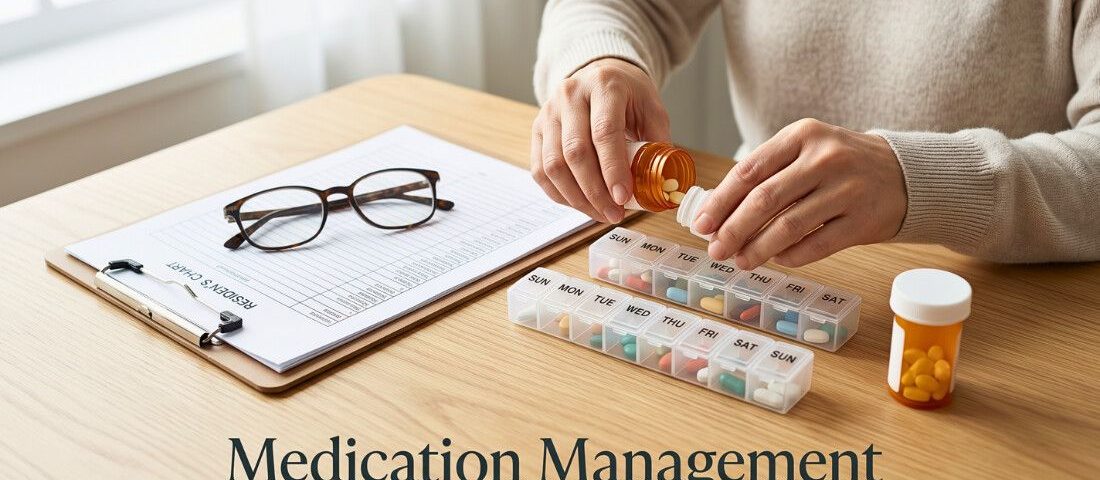
Managing multiple medications can quickly become too much for some seniors. One missed dose or taking the wrong one can turn a normal day into a frightening health emergency. Such moments can unsettle even the most vigilant caregivers, leaving everyone anxious and unsure.
Medication management in assisted living is more than a routine task. When carefully tracked and administered, it ensures medication safety and better health. Knowing someone is watching over each dose can bring comfort and peace of mind that words alone cannot capture.
Why Professional Medication Management Matters
As we get older, taking multiple medications, or polypharmacy, becomes more common. For many seniors, managing the correct dose, timing, and refills can be overwhelming.
Professional medication management takes that worry off your plate by:
- Preventing Mistakes: Avoiding missed doses, double-dosing, or other common errors.
- Monitoring Health: Spotting new symptoms early and checking for side effects or drug interactions.
- Keeping a Routine: Taking medications consistently helps manage chronic conditions like diabetes or high blood pressure.
Technology and Safety Standard
Staff no longer depend on memory or paper charts to track medications. Instead, many use electronic medication administration record (eMAR) systems to boost accuracy, safety, and reliability.
The system follows the “Three Rights” of medication safety:
- The Correct Medication: Staff scan and verify every medication against the resident’s profile.
- The Correct Dosage: The system digitally confirms the dose, helping prevent over- or under-medicating.
- The Correct Timing: Automated alerts prompt staff to give each dose exactly when it’s due.
Who Oversees the Process?
Medication safety relies on a coordinated team approach. Many senior living communities do more than just distribute the necessary medicine. They carefully manage it through a clear hierarchy of oversight:
- Specially Trained Staff: Frontline caregivers trained in safe medication handling and administration.
- Resident Care Manager: Provides clinical oversight and ensures staff follow all protocols.
- Executive Director: Monitors the program to maintain the highest standards of care and compliance with regulations.
Assistance vs. Administration: What’s the Difference?
Understanding which level of care your loved one needs is essential, as requirements can vary.
| Feature | Medication Assistance | Medication Administration |
| Who it’s for | Residents who are alert but may have physical challenges, such as arthritis | Residents with memory loss or complex medical needs |
| Staff Role | Reminding, opening containers, or steadying a hand | Preparing the dose and ensuring correct use |
| Autonomy | High. The resident stays in control of their schedule | The clinical team manages the entire process |
Essential Questions for Your Community Tour
Use this checklist when touring senior living communities to evaluate medication safety and management practices:
- Who is on-site? Is a licensed nurse (LPN or RN) available to oversee the medication program at all times?
- What is the tracking system? Do they rely on paper charts, or do they use an electronic system like eMAR?
- How are “As-Needed” (PRN) medications handled? For example, if your loved one has a headache, what is the protocol for giving aspirin?
- How are medication changes handled? How quickly do you update prescriptions when a doctor makes changes?
- How is communication handled? Will families receive alerts for missed doses or adverse reactions?
- How often are caregivers trained in medication safety? How stable is the team?
- What is the cost structure? Is medication management included in a flat monthly fee, or tiered based on the number of medications?
The Ultimate Benefit: Quality of Life
When staff handle medication management, family visits can feel completely different. You no longer have to count pills or check refills. Instead, you can focus on being present, relaxed, and fully engaged with your loved one.
For seniors, this support promotes better health outcomes. It also gives them the freedom to enjoy the activities and hobbies that make senior living rewarding.
Common Questions About Medication Management in Assisted Living
Is medication management mandatory?
Not always. Residents who can safely manage their own medications may keep them in their rooms. Many eventually choose professional support for convenience, safety, and consistency.
What happens if a resident refuses a dose?
Staff will never force a resident to take medication. They document the refusal and notify the nursing supervisor. If the issue becomes recurring, they contact the physician or family.
How are side effects or adverse reactions handled?
Staff monitor residents for new symptoms and report anything concerning to the nursing team. They promptly contact the physician if they suspect a reaction.
Can residents maintain some independence?
Yes, if they are able. Residents can take medications themselves under supervision or with partial assistance. At the same time, staff manage the more complex parts of their regimen.
What about emergencies?
Communities have protocols to respond to medical emergencies quickly, ensuring residents receive immediate care if needed.
Reliable Medication Management for Peace of Mind
Medication safety is essential to the well-being of residents in senior living. Families deserve confidence and trust when choosing care for their loved ones.
Enrich Senior Living offers structured medication management designed to protect residents and reassure families. Our teams coordinate closely with healthcare providers to ensure every dose is safe, accurate, and delivered on time.
Schedule a visit today to learn how we support health, safety, and a better life for residents.